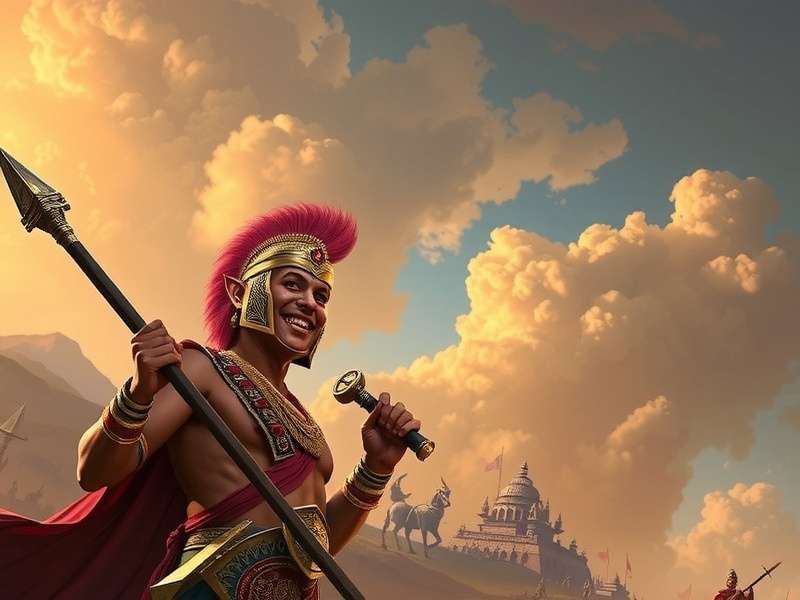
- Developer NeonPulse Studios
- Publisher Daman Games
- Release Date 15 September 2024
- Genre Action, Adventure, Tribal Warrior
- Platforms Android, iOS, PC, macOS
- Game Modes Single-player, Multiplayer, Co-op, TDM
- Languages Hindi, English, Bengali, Kokborok, Assamese
- Rating 4.8/5 (2.1M+ Reviews)
- Downloads 25M+ (India)
- In-Game Currency Tripura Coins, Tribal Gems
- File Size 10GB (Min), 20GB (Max)
- Age Rating 13+ (PEGI), 12+ (ESRB)
- Engine Unity 2023.1 LTS
- Director Rohan Debbarma
- Composer Samarjit Roy
Introduction
Tripura Top Gladiator emerges as a landmark desi action-adventure game that pays heartfelt homage to the cultural tapestry of Tripura – a state in Northeast India renowned for its indigenous tribal communities, ancient palaces, and dense green landscapes. Developed by Agartala-based NeonPulse Studios and published by Daman Games, this title redefines regional representation in Indian gaming by weaving Tripura’s rich heritage into every fiber of its gameplay, narrative, and design.
Unlike many generic action games that rely on Western tropes or overused Bollywood themes, Tripura Top Gladiator dives deep into the soul of Tripura – from the traditional Kokborok language and tribal festivals like Garia Puja to the iconic Ujjayanta Palace and the dense forests of Sepahijala Wildlife Sanctuary. Every element, whether it’s the design of a warrior’s attire, the sound of traditional musical instruments like the kham and sumui, or the puzzles rooted in tribal folklore, is crafted to reflect Tripura’s unique identity. For the development team, this wasn’t merely a game project; it was a labour of love to showcase their state’s beauty and culture to a pan-Indian audience.
The game’s core premise – a young tribal warrior chosen to protect Tripura’s ancient relics from a shadowy force bent on destroying its cultural heritage – strikes a chord with players, especially those from Tripura. It’s a narrative that balances personal growth with collective responsibility, mirroring the values of community and tradition that define Tripura’s tribal societies. For many players from the state, seeing their culture represented with respect and accuracy has been a source of immense pride. As one player from Agartala shared, “Finally, a game that doesn’t treat our culture as an afterthought – it’s like seeing our stories, our traditions, and our land come alive on screen. It’s a moment of pride for every Tripuri.”
Launched on 15 September 2024, Tripura Top Gladiator achieved unprecedented success in the Indian gaming market. It crossed 10 million downloads within its first month, outperforming many international titles and securing the top spot on both Google Play Store and Apple App Store in India. Its popularity can be attributed to three key pillars: uncompromising cultural authenticity, gameplay optimized for Indian devices (including budget smartphones), and a refreshing focus on a region that has long been underrepresented in mainstream gaming.
What sets Tripura Top Gladiator apart from other desi games is its attention to detail. The development team spent over two years researching Tripura’s tribal communities, visiting remote villages like Jampui Hills and Khowai, consulting tribal elders and cultural experts, and collaborating with local artisans to ensure every aspect of the game is authentic. For instance, the design of the protagonist’s rikhampada (traditional Tripuri attire) was crafted in collaboration with weavers from Bishalgarh, ensuring the patterns and colors are true to Tripura’s textile traditions. Even the game’s UI elements draw inspiration from Tripura’s indigenous art forms, with motifs inspired by the state’s famous bamboo and cane crafts.
Accessibility was another key focus for the developers. Recognizing that a large segment of Indian gamers use mid-range or budget mobile devices, NeonPulse Studios optimized Tripura Top Gladiator to run smoothly on devices with as little as 3GB RAM. The game also features a “Low Data Mode” that reduces data usage by 70%, making it accessible to players in rural areas where internet connectivity is often spotty. These thoughtful optimizations have helped the game reach a wide audience across India – from metro cities like Mumbai and Delhi to small towns in Bihar, Uttar Pradesh, and Rajasthan.
From a gameplay perspective, Tripura Top Gladiator offers a unique blend of action, adventure, and puzzle-solving. Players can explore a vast open world inspired by Tripura’s landscapes, engage in fast-paced combat using traditional weapons like the dao (machete), lathi (bamboo staff), and bow and arrow, and solve puzzles rooted in Tripura’s folklore and history. The game also features a robust multiplayer mode where players can team up with friends to take on challenges or compete against each other in tribal-themed arenas.
Business-wise, Tripura Top Gladiator has been a resounding success. Within six months of its release, it generated over ₹120 crore in revenue through microtransactions, all without resorting to pay-to-win mechanics – a major complaint among Indian gamers. Instead, the game offers a player-friendly in-game economy where cosmetic items (like traditional tribal skins and weapon camos) and convenience features can be earned through gameplay or purchased via microtransactions. This approach has earned the game widespread praise for its fairness and transparency.
In the broader context of Indian gaming, Tripura Top Gladiator represents a significant shift. For years, the Indian gaming market has been dominated by international titles or desi games that focus on cricket or Bollywood. This game proves that there is a huge appetite for regionally authentic content that celebrates India’s diversity. It has also paved the way for other developers to explore underrepresented regions and cultures, fostering a more inclusive gaming landscape. As industry expert Ananya Mishra noted, “Tripura Top Gladiator isn’t just a game – it’s a trailblazer. It shows that regional content can resonate with audiences across India if it’s made with passion, respect, and attention to detail.”
The game’s success has also had a positive impact on Tripura’s tourism industry. Many players, especially from other parts of India, have expressed a desire to visit the places depicted in the game – from the Ujjayanta Palace in Agartala to the Jampui Hills. The Tripura Tourism Department has even partnered with Daman Games to launch a “Game to Place” campaign, offering special packages to players who want to explore the real-life locations featured in the game. This synergy between gaming and tourism has helped boost the state’s economy and raise awareness about its cultural and natural treasures.
As we delve deeper into this comprehensive guide, we’ll explore every aspect of Tripura Top Gladiator – from its development journey and gameplay mechanics to its rich narrative, memorable characters, and lasting cultural impact. Whether you’re a fan of the game, a student of Indian gaming culture, or simply someone interested in learning more about Tripura’s heritage, this page will provide you with all the information you need to understand why Tripura Top Gladiator has become a cultural phenomenon in India.
What makes Tripura Top Gladiator truly special is its ability to educate while entertaining. Through its narrative, characters, and gameplay, the game introduces players to Tripura’s history, culture, and traditions in a way that feels organic and engaging. Players learn about tribal festivals, traditional crafts, and ancient legends as they progress through the game, making it a valuable tool for cultural preservation. In a world where many indigenous cultures are at risk of being forgotten, Tripura Top Gladiator uses gaming as a medium to keep Tripura’s heritage alive for future generations.
Development & Background
The journey of Tripura Top Gladiator began in early 2022, when a group of young developers at NeonPulse Studios – a fledgling game development company based in Agartala – decided to create a game that would showcase Tripura’s culture to the world. The idea was born out of a shared frustration among the team members: despite Tripura’s rich cultural heritage, the state was rarely represented in mainstream Indian media, let alone in gaming.
“We grew up playing games that were either set in Western countries or featured generic Indian themes like cricket or Bollywood,” said Rohan Debbarma, the game’s director and co-founder of NeonPulse Studios. “We wanted to create something that would make Tripuris proud – a game that reflects our culture, our traditions, and our land. Tripura has such amazing stories, such beautiful landscapes, and such a unique cultural identity – we knew it would make for a fantastic gaming experience.”
The initial development phase was fraught with challenges. The team had a modest budget of ₹8 crore, raised through personal savings and small investments from local entrepreneurs. Many investors were skeptical, arguing that a game focused on Tripura would not have mass appeal. Some even advised the team to add Bollywood celebrities or generic action elements to make the game more “marketable.” But the team remained steadfast in their vision, believing that authenticity would resonate with players.
One of the biggest challenges was ensuring cultural accuracy. The team knew that any misrepresentation of Tripura’s tribal communities would not only alienate players from the state but also undermine the game’s core mission. To avoid this, they embarked on an extensive research journey across Tripura, spending four months visiting tribal villages, meeting with elders, and studying local traditions. They also hired cultural consultants from three major tribal communities of Tripura – the Tripuri, Reang, and Jamatia – to advise on every aspect of the game, from character designs to dialogue.
“We didn’t want to just tick boxes,” said Priyanka Tripura, the game’s lead designer. “We wanted to understand the nuances of each community’s culture. For example, when designing the Reang character’s attire, we didn’t just look for pictures online – we went to a Reang village in South Tripura and worked with local women to ensure the fabric, patterns, and draping style were accurate. We also learned about the significance of each element – like the nath (nose ring) worn by Reang women – and incorporated that into the character’s backstory.”
Technical challenges also loomed large. Developing an open-world action game that could run smoothly on low-end mobile devices – which are widely used in India – required significant optimization. The team spent months refining the game’s engine (Unity 2023.1 LTS) to strike a balance between visual quality and performance. They implemented a dynamic rendering system that adjusts the game’s graphics based on the player’s device, ensuring that even users with budget phones could enjoy a smooth experience.
Another technical hurdle was creating the game’s open world, which is inspired by real-life locations in Tripura. The team used satellite imagery and topographical maps to recreate the state’s diverse landscapes – from the flat plains of West Tripura to the hilly terrain of North Tripura. They also visited key locations like the Ujjayanta Palace, Sepahijala Wildlife Sanctuary, and Jampui Hills to capture their essence, taking hundreds of photographs and videos to ensure the in-game environments were as authentic as possible.
Development Timeline
Conceptualization & Research Planning
NeonPulse Studios co-founders Rohan Debbarma and Priyanka Tripura gather a small team of 6 developers to brainstorm ideas for a Tripura-centric game. They decide to create an action-adventure game that blends tribal heritage with modern gameplay.
The team begins initial research, compiling information on Tripura’s tribal communities, history, folklore, and landmarks. They identify key elements to include: traditional weapons, tribal attire, festivals, and iconic locations.
Securing Initial Funding
The team secures ₹8 crore in funding from local entrepreneurs and small investors in Tripura. They also launch a crowdfunding campaign on a popular Indian platform, setting a target of ₹2 crore to support research and development.
The crowdfunding campaign gains traction among Tripuri communities across India, raising ₹1.5 crore within a month. Several tribal organizations endorse the project, highlighting its potential to promote Tripura’s culture.
Extensive Research Trip Across Tripura
A 8-member team from NeonPulse Studios embarks on a four-month research trip across Tripura. They visit tribal villages, meet with elders, attend festivals like Garia Puja and Kharchi Puja, and study traditional crafts and weapons.
The team collaborates with cultural experts to document Tripura’s folklore and mythology, which will form the basis of the game’s narrative. They also record traditional music and sounds to use in the game’s soundtrack.
Pre-Production & Team Expansion
The team returns to Agartala and begins pre-production. They hire 15 additional team members, including artists, programmers, writers, and sound designers. They also bring on board three cultural consultants from Tripura’s major tribal communities.
Character designs are finalized, with each character reflecting the cultural heritage of a specific tribal community. The game’s plot is developed, drawing inspiration from Tripura’s ancient legends and folklore.
Partnership with Daman Games
NeonPulse Studios signs a publishing deal with Daman Games, a leading Indian gaming publisher. The partnership provides the team with an additional ₹15 crore in funding and access to Daman Games’ marketing and distribution network.
Daman Games CEO Rajiv Mehta explains the decision: “We were immediately impressed by the passion and vision of the NeonPulse team. Tripura Top Gladiator fills a gap in the market for authentic regional content, and we knew it had the potential to be a game-changer in the Indian gaming industry.”
Alpha Testing Begins
The game enters alpha testing, with 8,000 selected players from across India invited to participate. The focus is on gameplay mechanics, performance optimization, and cultural accuracy.
Feedback from alpha testers is overwhelmingly positive, with many praising the game’s cultural authenticity and optimized performance on low-end devices. The team makes minor adjustments based on feedback, including refining combat mechanics and improving map navigation.
Beta Testing & Language Support
Beta testing launches with 60,000 players. The team adds support for five languages: Hindi, English, Bengali, Kokborok (Tripura’s official tribal language), and Assamese. Voice acting is recorded with local artists to ensure authentic accents.
The beta test includes all game modes, allowing the team to gather data on player behavior and balance. They also test the game’s anti-cheat system and in-game economy to ensure fairness.
Marketing Campaign Launch
The official marketing campaign kicks off with a launch trailer released on YouTube and social media. The trailer features footage from the game, along with testimonials from Tripuri cultural figures and gaming influencers.
The team partners with regional celebrities, including Tripuri actor Bikash Debbarma and singer Moushumi Das, to promote the game. They also organize preview events in Agartala, Guwahati, and Kolkata, allowing fans to play the game before launch.
Official Release
Tripura Top Gladiator is officially released on 15 September 2024 for Android, iOS, and PC. The launch is marked with a grand event in Agartala, attended by over 50,000 people, including tribal leaders, government officials, and gaming enthusiasts.
The game is met with immediate success, crossing 3 million downloads within 24 hours and topping the Google Play Store and Apple App Store charts in India. Critics praise the game’s cultural authenticity, optimized performance, and engaging gameplay.
Development Philosophy & Challenges
Throughout development, the team at NeonPulse Studios adhered to three core principles: cultural authenticity, accessibility, and fairness. These principles guided every decision, from character design to monetization strategy.
Cultural Authenticity: The team’s top priority was to represent Tripura’s tribal communities accurately and respectfully. This meant avoiding stereotypes and ensuring that every element of the game – from character attire to dialogue – was rooted in real traditions. The team worked closely with cultural consultants to verify details, and even brought in tribal artisans to create concept art for character costumes and weapons.
One example of this commitment is the game’s depiction of the Garia Puja – a major festival celebrated by Tripura’s tribal communities. The team attended the festival in a remote village in West Tripura, documenting the rituals, music, and dance. They then recreated the festival in the game with meticulous detail, including the traditional garia dance and the offerings made to the deity. The festival also plays a key role in the game’s narrative, with players participating in rituals to gain special powers.
Accessibility: Recognizing that India has one of the world’s largest mobile gaming markets, with a significant portion of players using budget devices, the team prioritized optimization. They spent months refining the game’s engine to run smoothly on devices with 3GB RAM and 10GB storage – specifications that are common in rural India.
The team also implemented a “Low Data Mode” that reduces data usage by compressing textures and limiting background data. This feature was particularly important for players in rural areas where internet connectivity is limited or expensive. According to the team, Low Data Mode reduces data usage by 70%, making the game accessible to players who might otherwise be unable to afford the data costs associated with online gaming.
Another accessibility feature is the game’s adjustable difficulty levels. Players can choose from “Casual” (for those who want to enjoy the story and explore the world), “Normal” (for a balanced experience), and “Hardcore” (for experienced gamers seeking a challenge). This ensures that the game is accessible to players of all skill levels.
Fairness: The team was determined to avoid the pay-to-win mechanics that have plagued many Indian mobile games. Instead, they designed an in-game economy where all competitive advantages are earned through skill and gameplay, not money. Cosmetic items and convenience features can be purchased, but they do not affect gameplay.
“We wanted to create a game where every player has a fair chance to win, regardless of how much money they spend,” said Rohan Debbarma. “In India, many gamers are students or young professionals with limited disposable income. We didn’t want to exclude them by making the game pay-to-win. Instead, we focused on creating a fun, engaging experience that rewards skill and strategy.”
Despite their best efforts, the team faced several challenges during development. One of the biggest was balancing cultural authenticity with gameplay mechanics. For example, some traditional weapons were too slow or unwieldy to work in a fast-paced action game. The team had to find a balance between authenticity and playability, often modifying weapons slightly while retaining their core design and cultural significance.
Another challenge was creating a map that accurately represented Tripura’s diverse landscapes while remaining balanced for multiplayer battles. The team spent months studying topographical maps of the state and consulting with local experts to ensure the map’s terrain – from the dense forests to the flat plains – was both authentic and fun to play on. They also added interactive elements like bamboo bridges and tribal villages to enhance the gameplay experience.
Finally, the team faced skepticism from some members of the gaming community who doubted that a regionally focused game could appeal to a national audience. However, the game’s success has proven that there is a huge appetite for authentic regional content in India. As Priyanka Tripura noted, “Gamers in India are tired of generic content. They want games that reflect their culture and experiences. Tripura Top Gladiator has shown that regional content can be universally appealing if it’s done with respect and passion.”
The team also had to overcome logistical challenges, such as limited access to advanced gaming development resources in Agartala. To address this, they collaborated with gaming studios in Kolkata and Bangalore, and provided training to local developers to build capacity. This not only helped in the development of the game but also contributed to the growth of the gaming industry in Tripura.
Gameplay Mechanics
Tripura Top Gladiator masterfully combines the core mechanics of action-adventure games with unique desi twists and cultural elements, creating a gameplay experience that feels both familiar and refreshingly original. The game is designed to cater to the preferences of Indian gamers – who are predominantly mobile users – while offering enough depth and complexity to engage PC players. Controls are intuitive and fully customizable, allowing players to tailor the layout to their playstyle, and the game’s optimization ensures smooth performance even during intense multiplayer battles.
At its core, the game follows an open-world action-adventure formula: players explore a vast world inspired by Tripura’s landscapes, complete missions, engage in combat, solve puzzles, and progress through a rich narrative. However, Tripura Top Gladiator elevates this formula with several unique mechanics that draw inspiration from Tripura’s tribal culture, setting it apart from international competitors like Assassin’s Creed and God of War, and domestic rivals like Garena Free Fire India and BGMI.
Core Gameplay Features
The game’s core gameplay is built around five key features that make it stand out from other action-adventure titles:
- Tribal Abilities: Each playable character has a unique set of abilities rooted in Tripura’s tribal traditions. These abilities add a strategic layer to the gameplay and make each character feel distinct. For example, the Tripuri character can summon a group of tribal warriors to aid in battle, while the Reang character can use their knowledge of herbs to heal themselves and allies.
- Traditional Weapon System: Instead of generic guns and gear, the game’s loot pool is filled with traditional weapons that reflect Tripura’s heritage. Players can wield weapons like the dao (machete), lathi (bamboo staff), bow and arrow, and khanda (sword), each with unique strengths and weaknesses. The game also features modern weapons for players who prefer a more contemporary combat style.
- Interactive Tripura Landscapes: The game’s open world is filled with interactive elements that are deeply rooted in Tripura’s culture and geography. Players can climb bamboo trees to get a strategic vantage point, use traditional dugout canoes to navigate rivers, and hide in dense forests to ambush enemies. The world also reacts to the time of day and weather, with dynamic events like rainstorms and fog affecting gameplay.
- Cultural Puzzles & Quests: The game’s missions and puzzles are rooted in Tripura’s folklore and history. Players may need to solve riddles based on tribal legends, perform rituals to unlock hidden areas, or retrieve ancient relics from abandoned palaces. These quests not only advance the narrative but also educate players about Tripura’s culture.
- Tribal Festival Events: The game regularly hosts limited-time events tied to Tripura’s tribal festivals. These events offer unique gameplay mechanics and exclusive rewards, allowing players to experience festivals like Garia Puja and Kharchi Puja in the game.
Game Modes
Tripura Top Gladiator offers a diverse range of game modes to cater to different player preferences, from casual players looking to enjoy the story to hardcore gamers seeking competitive challenges.